The Logical Fallacy Field Guide
Every debate, essay, and online argument is full of moves that sound convincing but do not hold up. A logical fallacy is a broken step in reasoning. Learn to name them and you can defend your own case and take apart a weak one. Here are the ones you will meet most, with how to spot and answer each.
Read the guide, then use the spot-the-fallacy quiz to practice naming them out loud. In a real debate, name it, say why it does not prove the point, and steer back to the question.
Free, print-ready, no email required
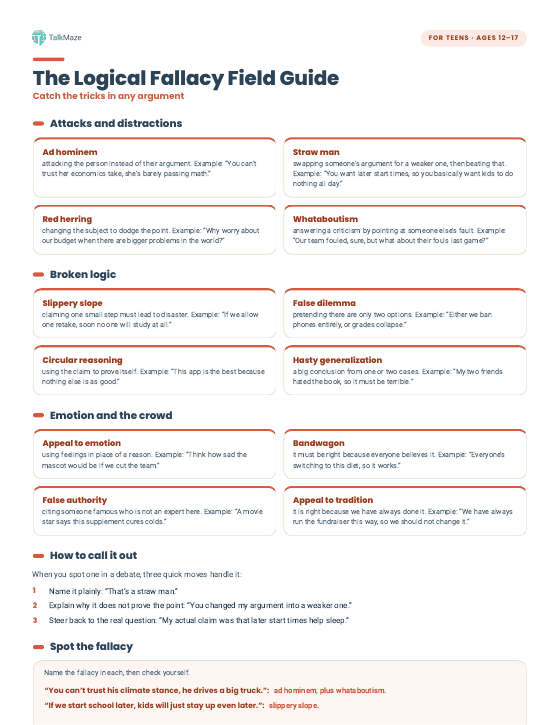 Preview
What’s inside
Attacks and distractions
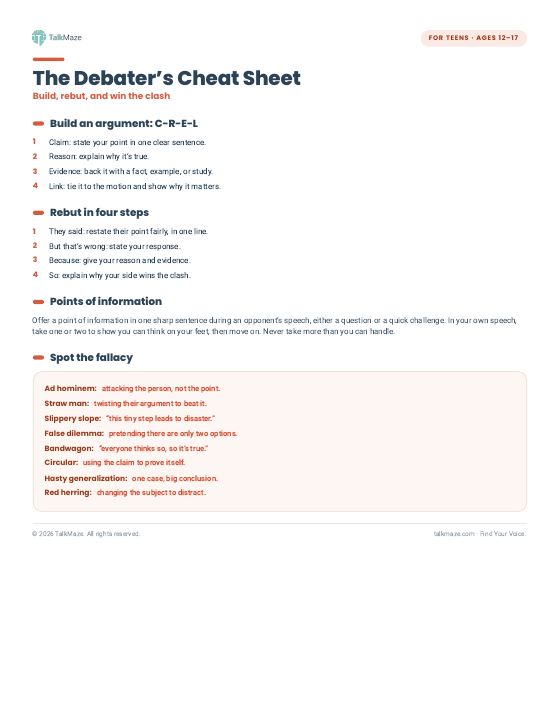
- Ad hominem: attacking the person instead of their argument. Example: “You can’t trust her economics take, she’s barely passing math.”
- Straw man: swapping someone’s argument for a weaker one, then beating that. Example: “You want later start times, so you basically want students to do nothing all day.”
- Red herring: changing the subject to dodge the point. Example: “Why worry about our budget when there are bigger problems in the world?”
- Whataboutism: answering a criticism by pointing at someone else’s fault. Example: “Our team fouled, sure, but what about their fouls last game?”
Broken logic
- Slippery slope: claiming one small step must lead to disaster. Example: “If we allow one retake, soon no one will study at all.”
- False dilemma: pretending there are only two options. Example: “Either we ban phones entirely, or grades collapse.”
- Circular reasoning: using the claim to prove itself. Example: “This app is the best because nothing else is as good.”
- Hasty generalization: a big conclusion from one or two cases. Example: “My two friends hated the book, so it must be terrible.”
Emotion and the crowd
- Appeal to emotion: using feelings in place of a reason. Example: “Think how sad the mascot would be if we cut the team.”
- Bandwagon: it must be right because everyone believes it. Example: “Everyone’s switching to this diet, so it works.”
- False authority: citing someone famous who is not an expert here. Example: “A movie star says this supplement cures colds.”
- Appeal to tradition: it is right because we have always done it. Example: “We have always run the fundraiser this way, so we should not change it.”
How to call it out
When you spot one in a debate, three quick moves handle it:
- Name it plainly: “That’s a straw man.”
- Explain why it does not prove the point: “You changed my argument into a weaker one.”
- Steer back to the real question: “My actual claim was that later start times help sleep.”
Spot the fallacy
Name the fallacy in each, then check yourself.
- “You can’t trust his climate stance, he drives a big truck.”: ad hominem, plus whataboutism.
- “If we start school later, students will just stay up even later.”: slippery slope.
- “Either you support the new rule or you don’t care about safety.”: false dilemma.
- “Everyone in class is doing the extra credit, so it must be worth it.”: bandwagon.
- “A pro gamer endorsed this energy drink, so it must boost focus.”: false authority.
Use it well
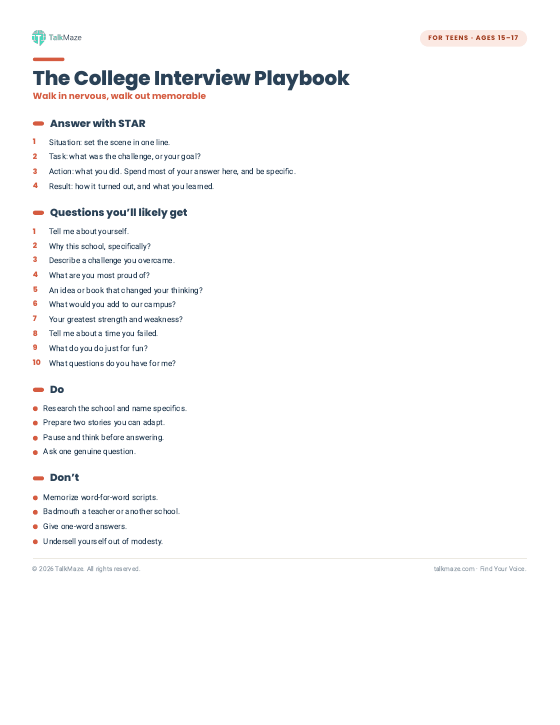
- Steelman first. Restate their argument at its strongest before you challenge it.
- Do not fallacy-hunt to score points. One clean call beats five nitpicks.
- A fallacy means the reasoning is weak, not that the conclusion is false. Beat the logic, then make your own case.
Ready when you are
Ready for a real coach?
Printables are a great start. A free 30-minute assessment pairs your child with a TalkMaze coach who works with them live and builds a plan. No credit card, no commitment.
Book my free assessmentFree assessment · no credit card · no commitment